[ 01 ] overview
Company
DaVita Healthcare
Role
Design Lead, 0–1 product
Team
PM, 6 devs, clinical SMEs, UXR
Timeline
2023 — 2025, live Q2 2024
Platform
SMART on FHIR web app
[ 02 ] The Challenge
Cerner EHR, 2023
Fragmented data & inefficient workflows
Preparing to contact patients & providing care was a daily obstacle for Registered Nurses (RNs). The patient's chart, containing critical information, was fragmented across many pages within Cerner's Electronic Health Record.
What should have been a simple task to prepare for patient outreach devolved into fact finding missions requiring significant time & effort.
Fragmented Data
Critical information like discharge summaries & care plans, were spread across the chart—making it difficult for nurses to get a holistic view.
Excessive Clicks
RNs spent 60-70 clicks per patient, supplemented with handwritten notes & personal tracking systems to stay organized.
Complicated Prep
Without standardized documentation practices in place, information was recorded in various formats, complicated care preparation.
[ 03 ] The Design Approach
Research to co-creation
We set out to build a future where RNs didn't need to chase data and instead are free to focus on patient care. We pursued a SMART on FHIR solution that would consolidate critical information.
Co-creation allowed us to define a product roadmap that would span more than a year of iteration of design & development. It ensured the Patient Care Summary was scalable & built to support clinical outcomes.
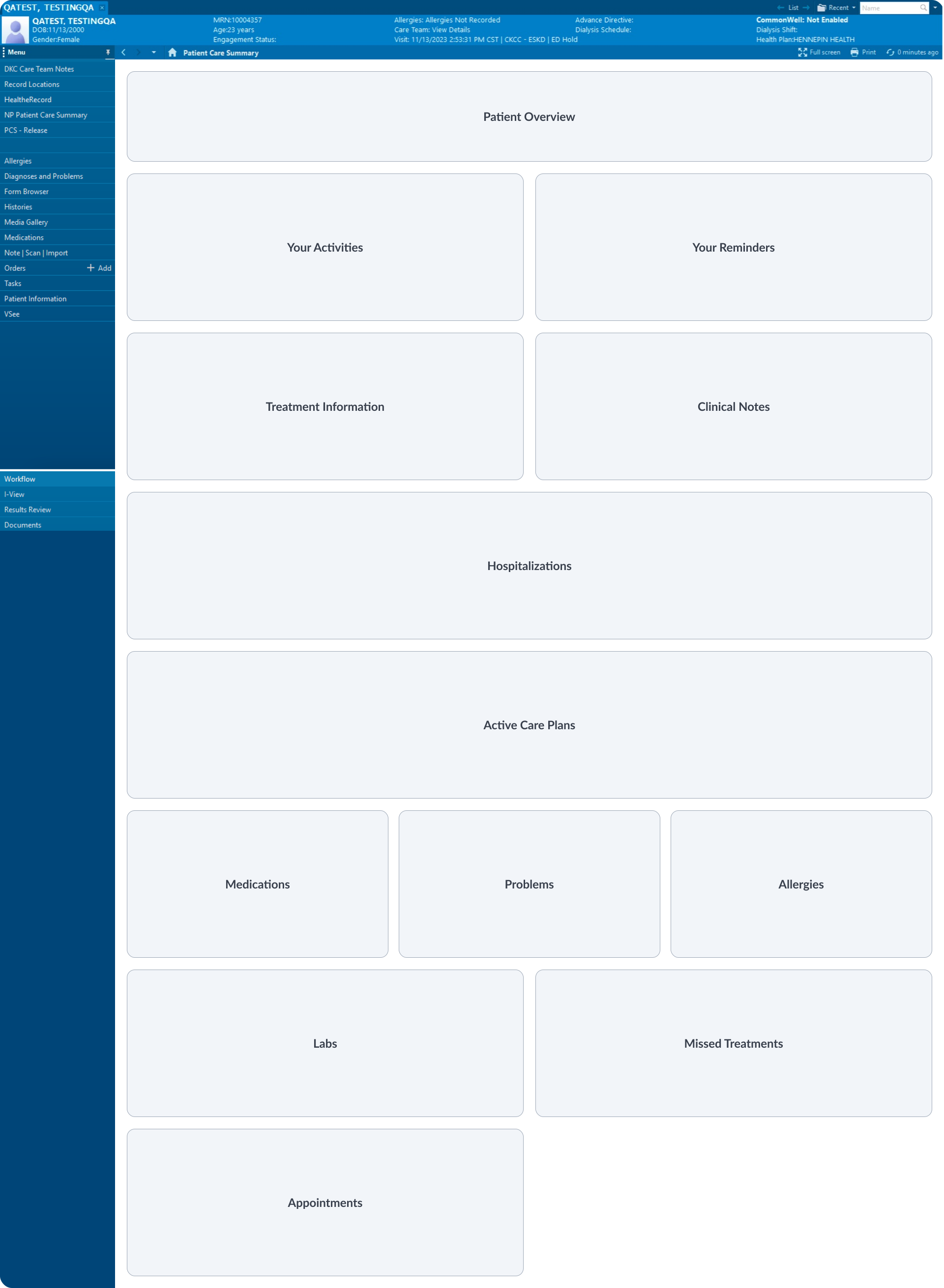
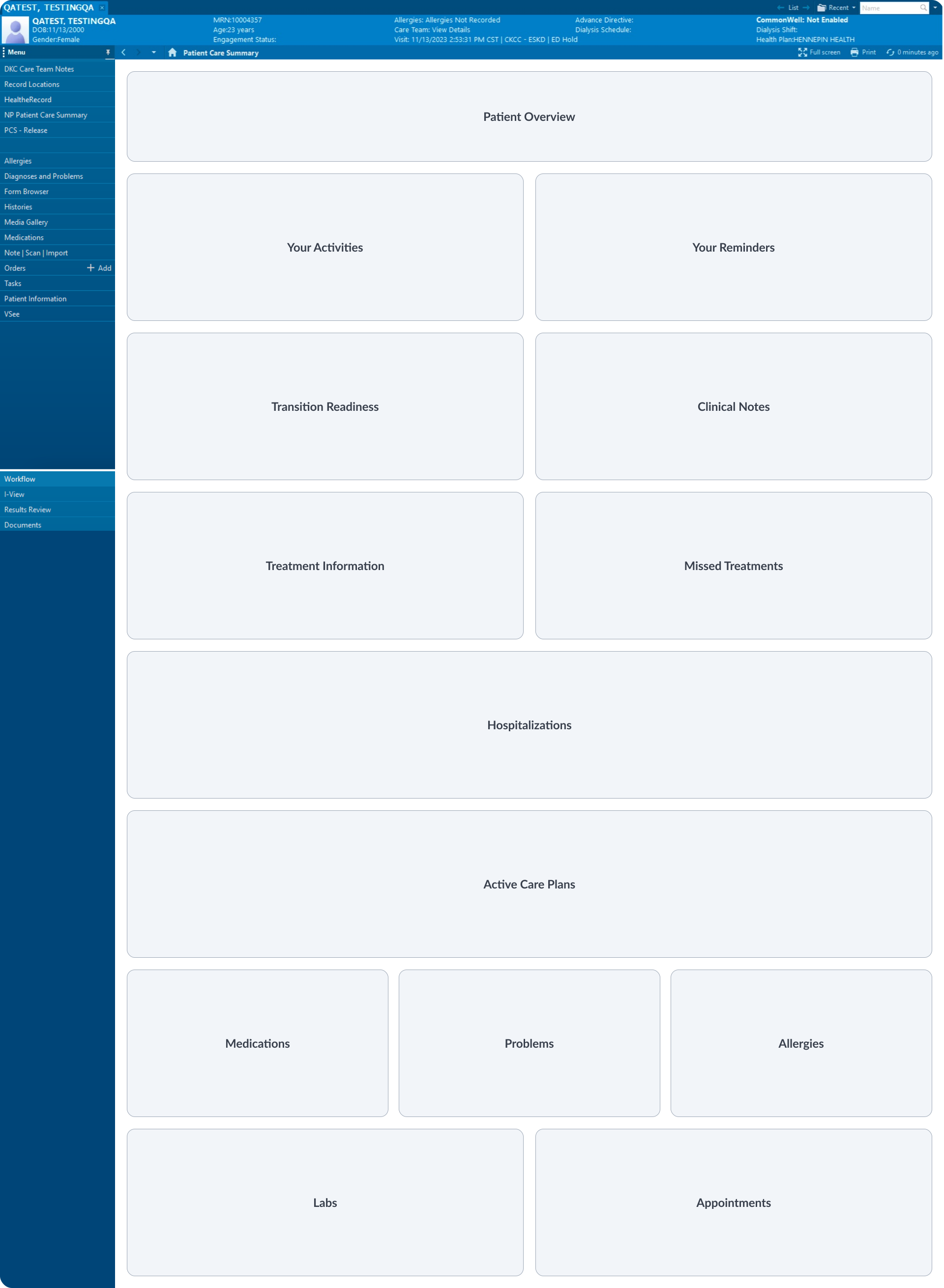
Initial Layout Wireframes
Grounding design in real user needs
To build a truly meaningful product, we needed to understand the system and the people navigating it.
Rather than treating user interviews as isolated sessions, I used them to build a living foundation for continuous discovery. I transformed raw insights into interview snapshots. The artifacts became core tools for prioritization, iteration, & knowledge sharing throughout the project.
Registered Nurse

Quick Facts
ESKD RN
Telehealth
Experience (5+ years)
Cerner Only
"If I don't have the discharge summary before making contact, I'm going to do a deep dive and try to get information—it means a lot to my patients."
Insights
Discharge summary information determines effecitiveness of patient contact
Uses excel sheet to keep track of information not readily available within system
Opportunities
Provide single click entry to discharge summary information during hospitalization
Capture most important information to prepare for patient contact
interview snapshots help build a knowledge library
Typical Workflow
As the audit concluded, I cross referenced product's backlog priorities with usability enhancements. Then, I created an impact matrix to create the design roadmap for the project.
To ensure the roadmap was solidified and the impact-effort dynamic was accurate, I collaborated with engineering to co-create the early stages of the application.
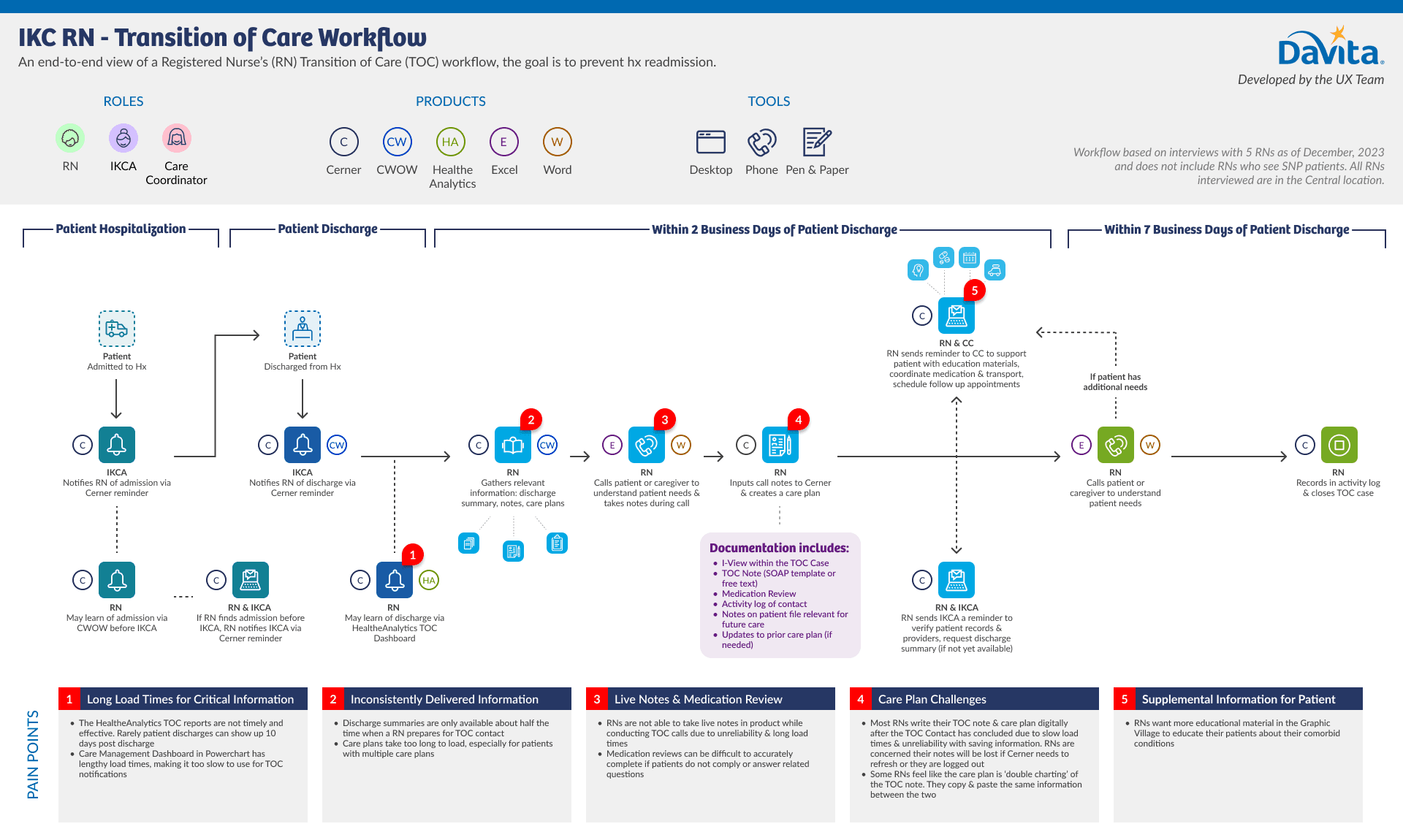
Workflow maps help to identify friction and gaps for the user.
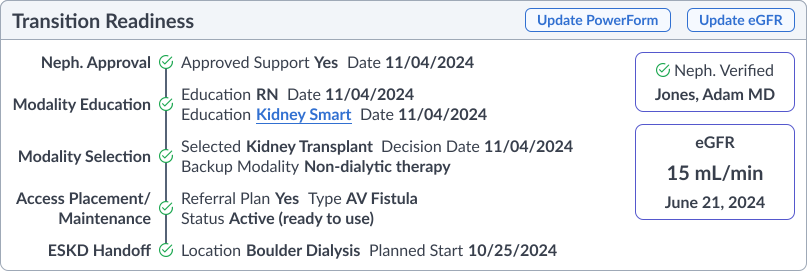
Helping patients on their journey
Helping patients transition to dialysis or prepare for kidney transplant is among the most complex & critical responsibilities in kidney care.
RNs were left piecing together information manually, unable to answer the most important question—where is the patient in their kidney care journey, and what's next?
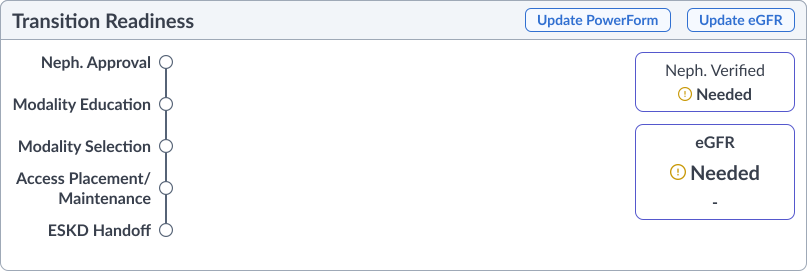
Constraints
The constraints included a nonlinear patient journey, third party milestones, and a fixed positioning within the page.
Flexible UI
I needed to design a UI component that felt narrative-focused, flexible, & clinical at the same time.
I explored PrimeNG’s available components, but quickly realized that none offered the flexibility we needed.
Dynamic Timeline
The timeline adapts to patient data volume, accommodates nonlinear milestones & approvals, and provides in-line actions to take next steps.
Loved
The card quickly became one of the most loved elements of the Patient Care Summary.
It provides a visual understanding of each patient's path and made previously invisible progress points actionable.
[ 04 ] The Solution
Unified workspace
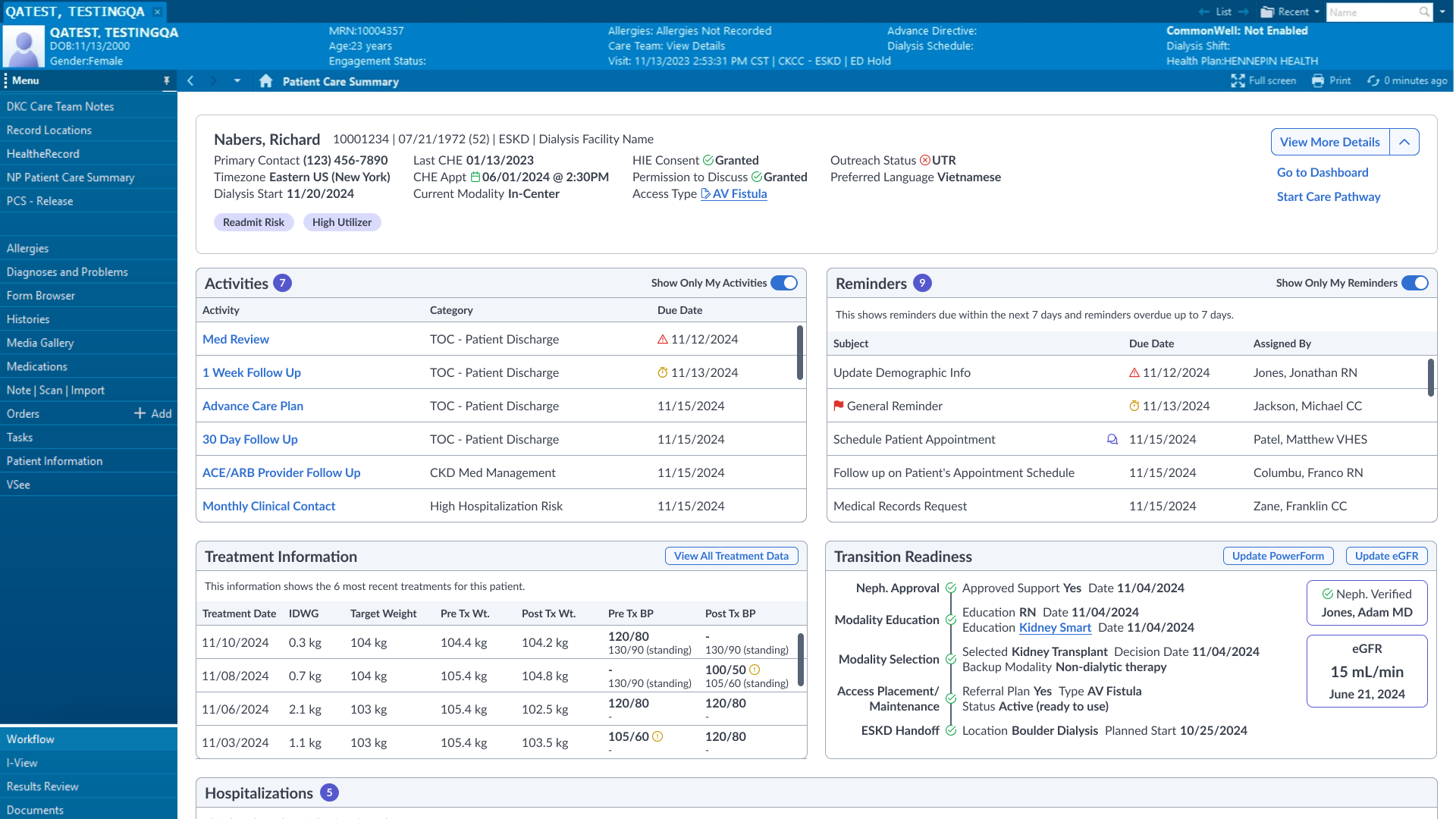
Working with a clear product vision & grounded in user insights, I led the design of the Patient Care Summary—a unified, actionable workspace that consolidated critical patient data and tasks onto a single, streamlined page.
Centralized Data
We streamlined over 60 clicks into a single view, surfacing the most relevant patient details informing RNs to provide care.
Localized Workflow
I compressed time to value on the interface by introducing embedded powerforms & designed a sidebar to ensure local task completion.
Clear IA
Alongside product partners, we conducted rolling user interviews to ensure the most important data surfaced as the right times.
Solution Quickview
[ 05 ] Results & business impact
Live since Q2 2024
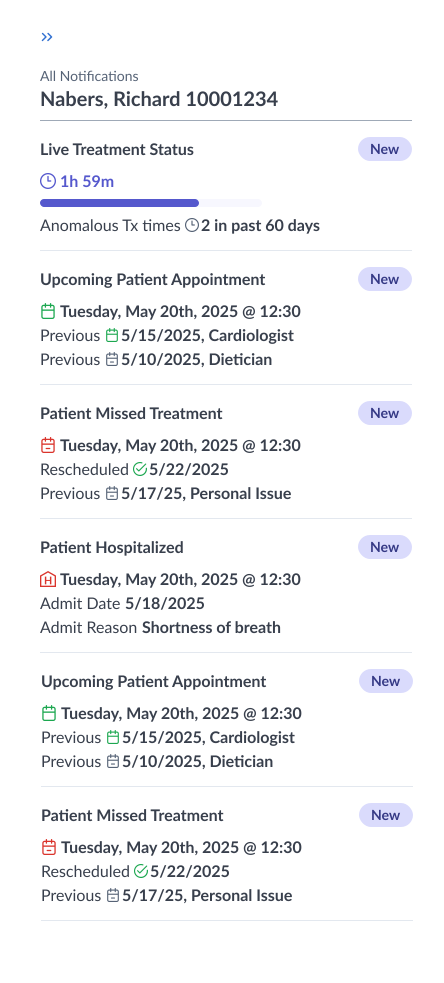
The initial designs for the Patient Care Summary went live in Q2 2024, with new capabilities added monthly. According to feedback from users, each addition provides immense value in helping the RNs prepare for patient contact to provide quality care. In total, we’ve reduced preparation for patient contact from 50-60 clicks to less than 10.
Point NPS increase
Among RNs preparing for patient contact daily
Clicks per patient
From 60–70 clicks down to a single view
Screens to prepare
One page replaced seven separate chart screens
“Before the PCS, I had to review 7 different screens to get the same info. I love all of these updates…thank you so much!”
“The patient data prominently on the page saves me so much time. It’s everything we’ve asked for—a dream come true!”
[ 06 ] Takeaways
Carrying it forward
[ 01 ]
[ 02 ]
[ 03 ]
Keep reading
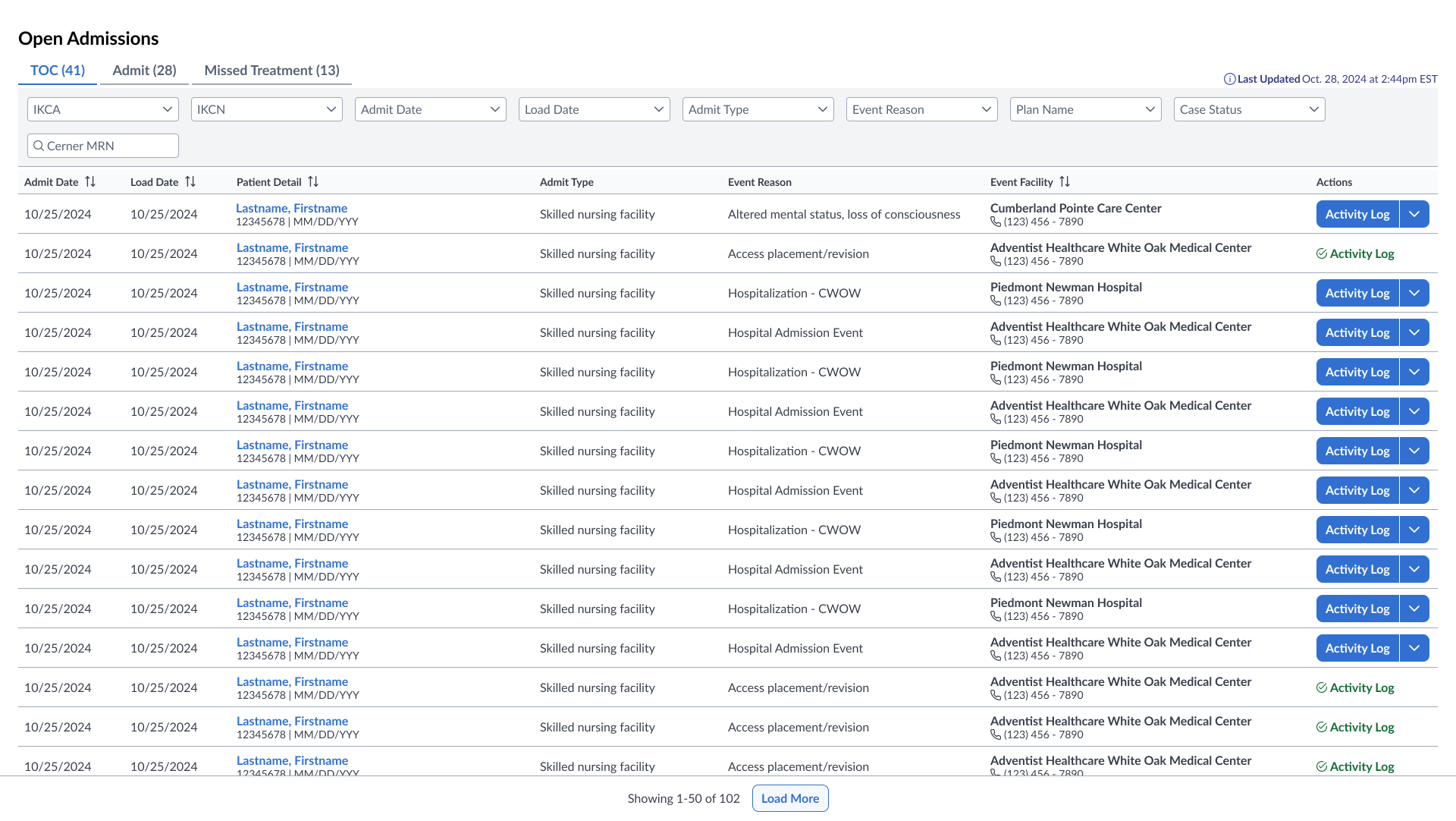
Open Admissions
Reimagining an inefficient interface to an intuitive workflow hub. Reduced task time by 30% & seeing an NPS score of 35.

AI Practices
I use AI to explore, build, and learn. It's an extension of my thinking that accelerates conceptual work, moving from theory to reality without sacrificing quality.
Modernizing OneView App
Repositioning OneView's mobile app to a trusted clinical companion—leading a redesign & a 40+ point NPS increase.